
Gullfaks · Equinor · 2025
Mechanical access and circulation in a live offshore well.
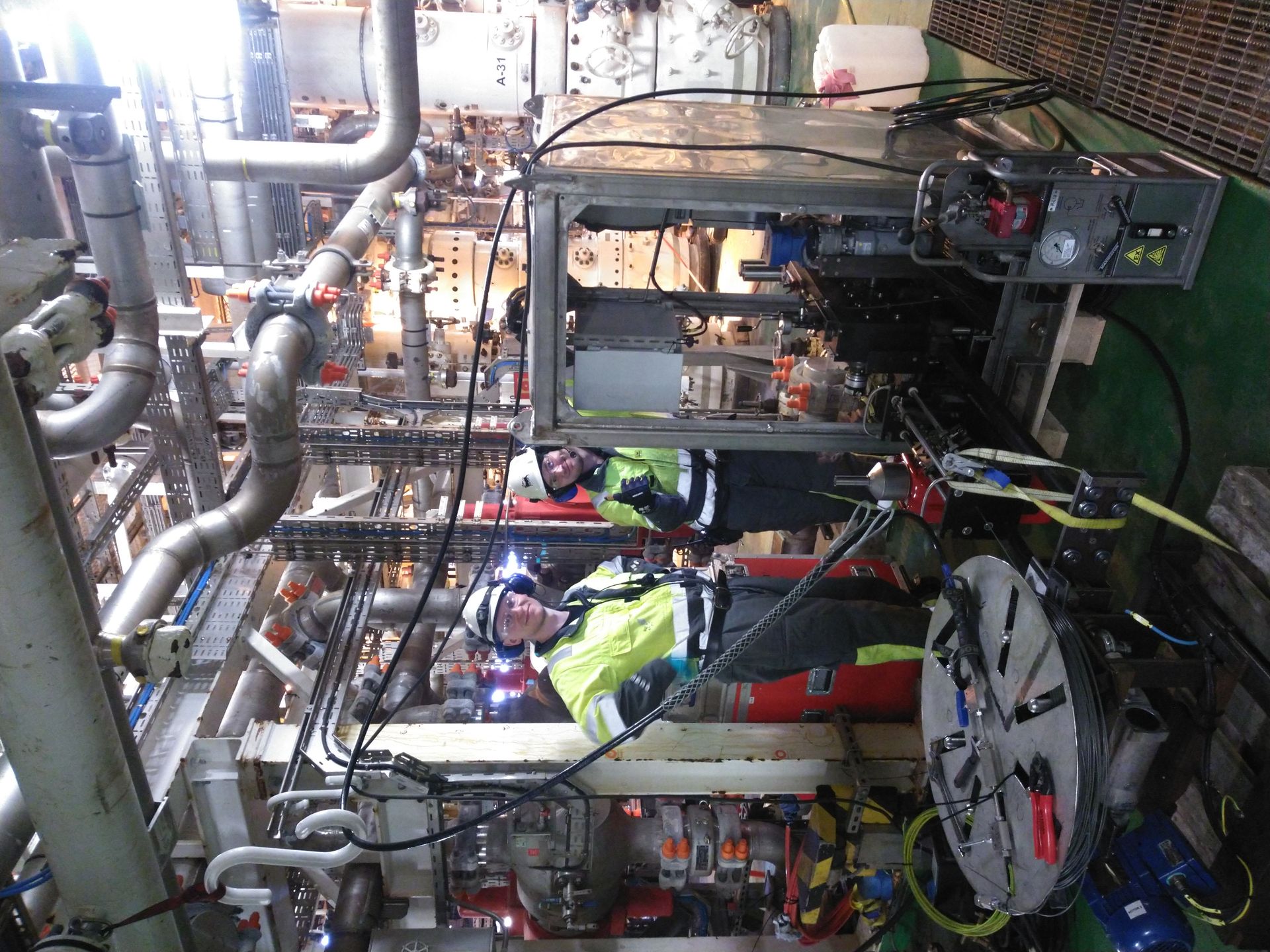
Two mobilisations on Gullfaks restored mechanical access to a blocked control line under full pressure control — without a workover, without a drilling rig, and without stopping other production.
Gullfaks
Field
2
Mobilisations
Debris
Samples recovered
Live well
Pressure control held
The well
A mature NCS well with a blocked control line — not a workover candidate yet.
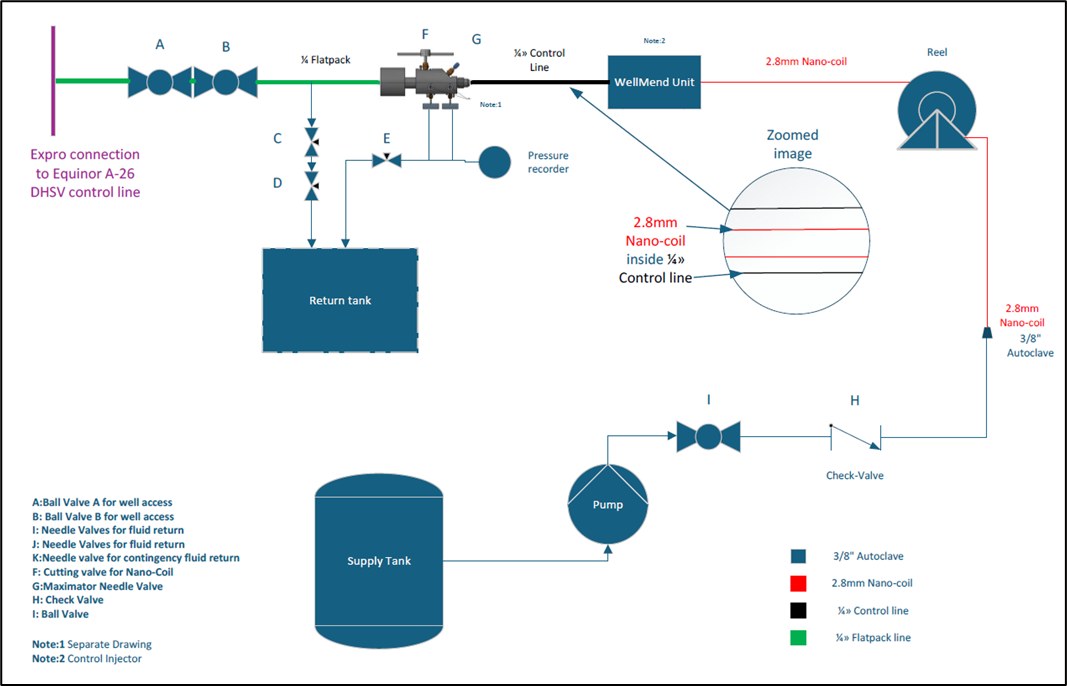
Control-line functionality was lost. The obstruction sat near surface. The requirement was pressure-controlled intervention: access, assess, and mechanically interact with the blockage without escalating to heavy intervention.
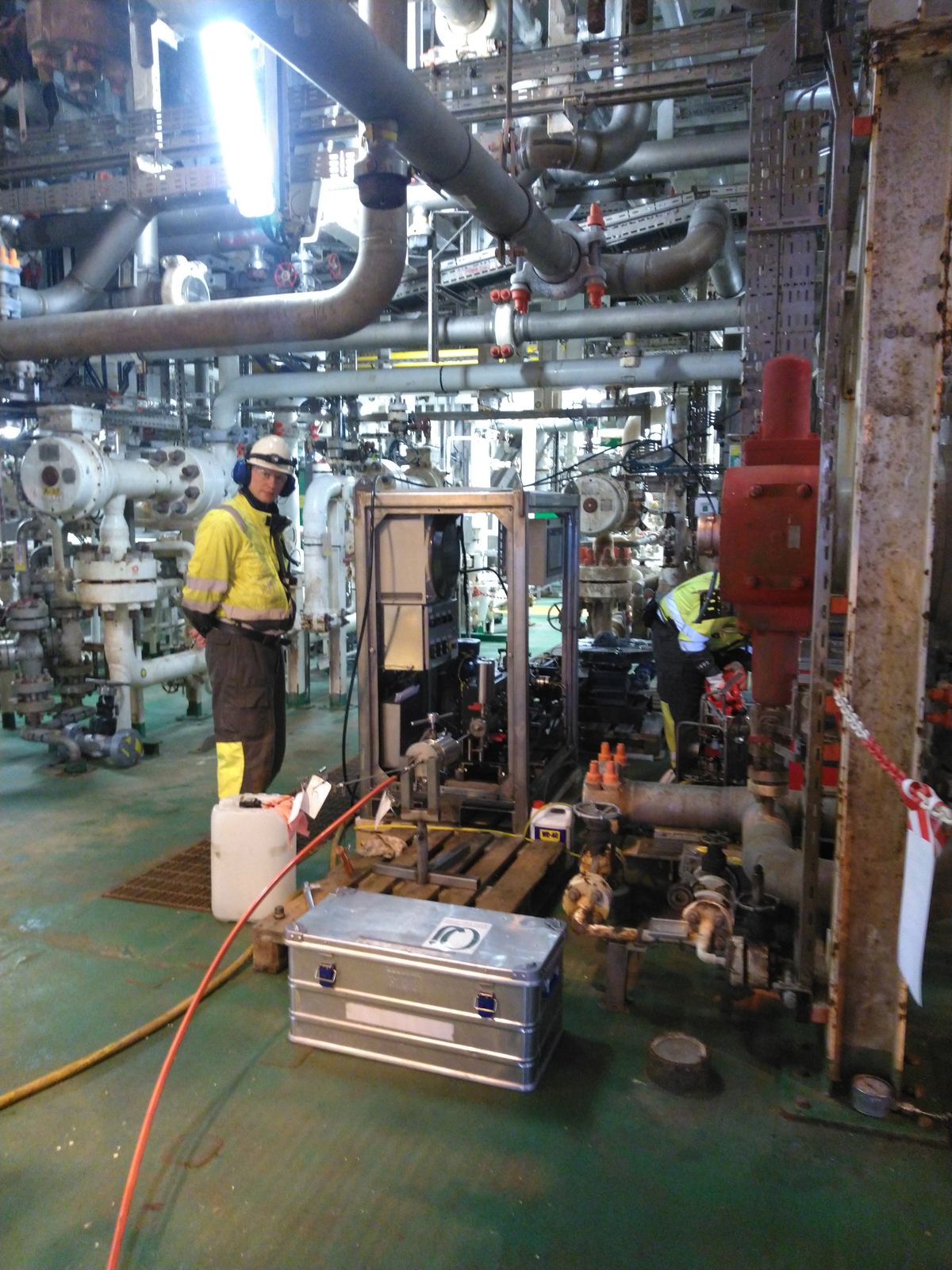
A four-person team mobilised with a one-pallet ATEX Zone 1 unit. Other production on the installation was not shut in.
Execution
Two mobilisations. Solid rod first, NanoCoil second.
01
Solid rod
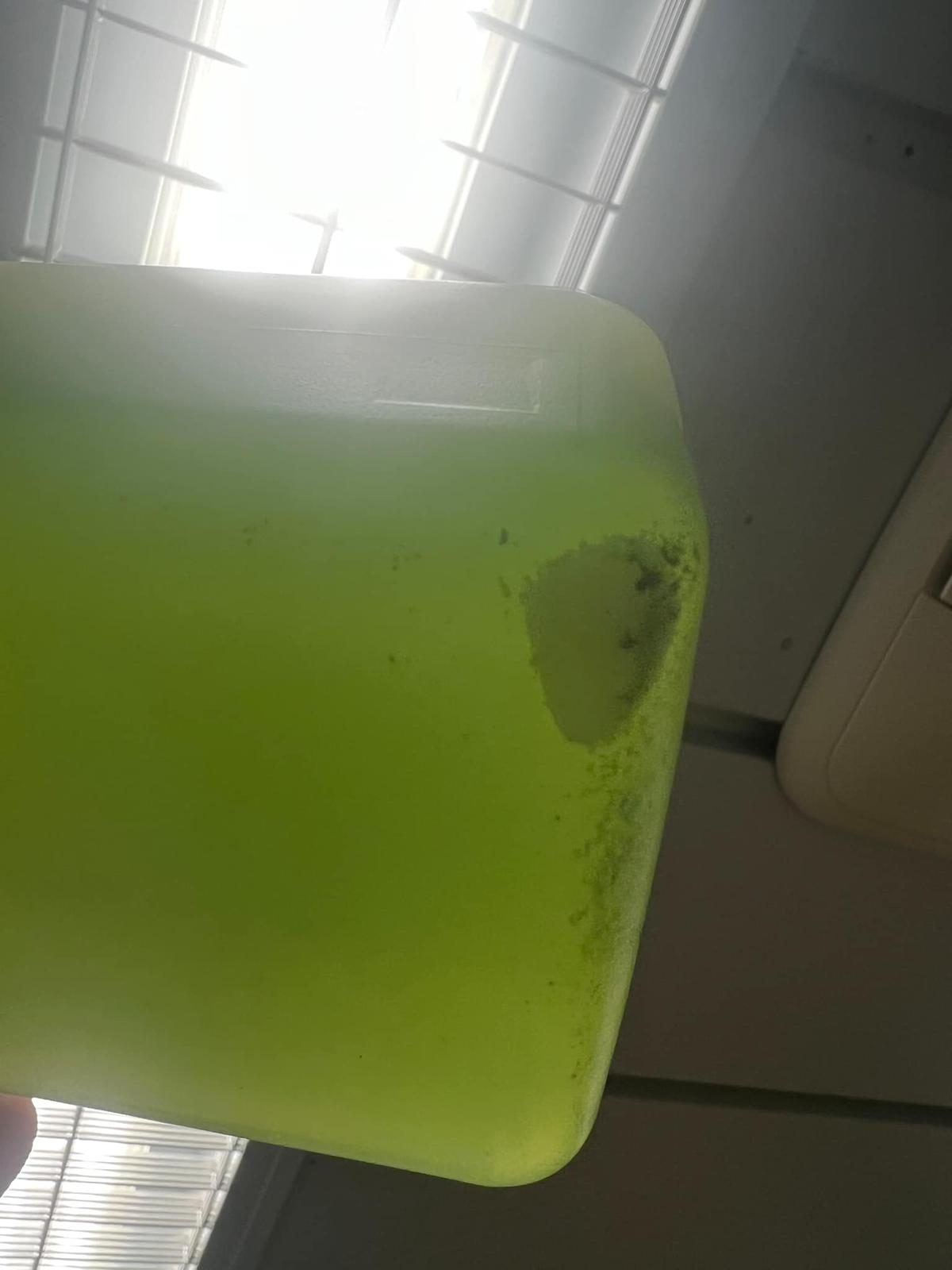
Run in hole. Obstruction tagged and mechanically displaced under full pressure control.
02
Solid rod + NanoCoil
Circulated with diesel, recovered solid debris for platform laboratory and onshore analysis.
Result
Access, circulation, and sample recovery — in a live offshore environment.
- Obstruction depth identified
- Mechanical displacement performed
- Controlled circulation established
- Solid and suspended debris recovered
- Pressure control maintained throughout
- ATEX-classified unit, one-pallet footprint
The unit is field-proven on the Norwegian Continental Shelf with Equinor. The same access method is now the basis for through-tubing abandonment work: clean, verify, and plug control and injection lines without tubing retrieval.
Samples
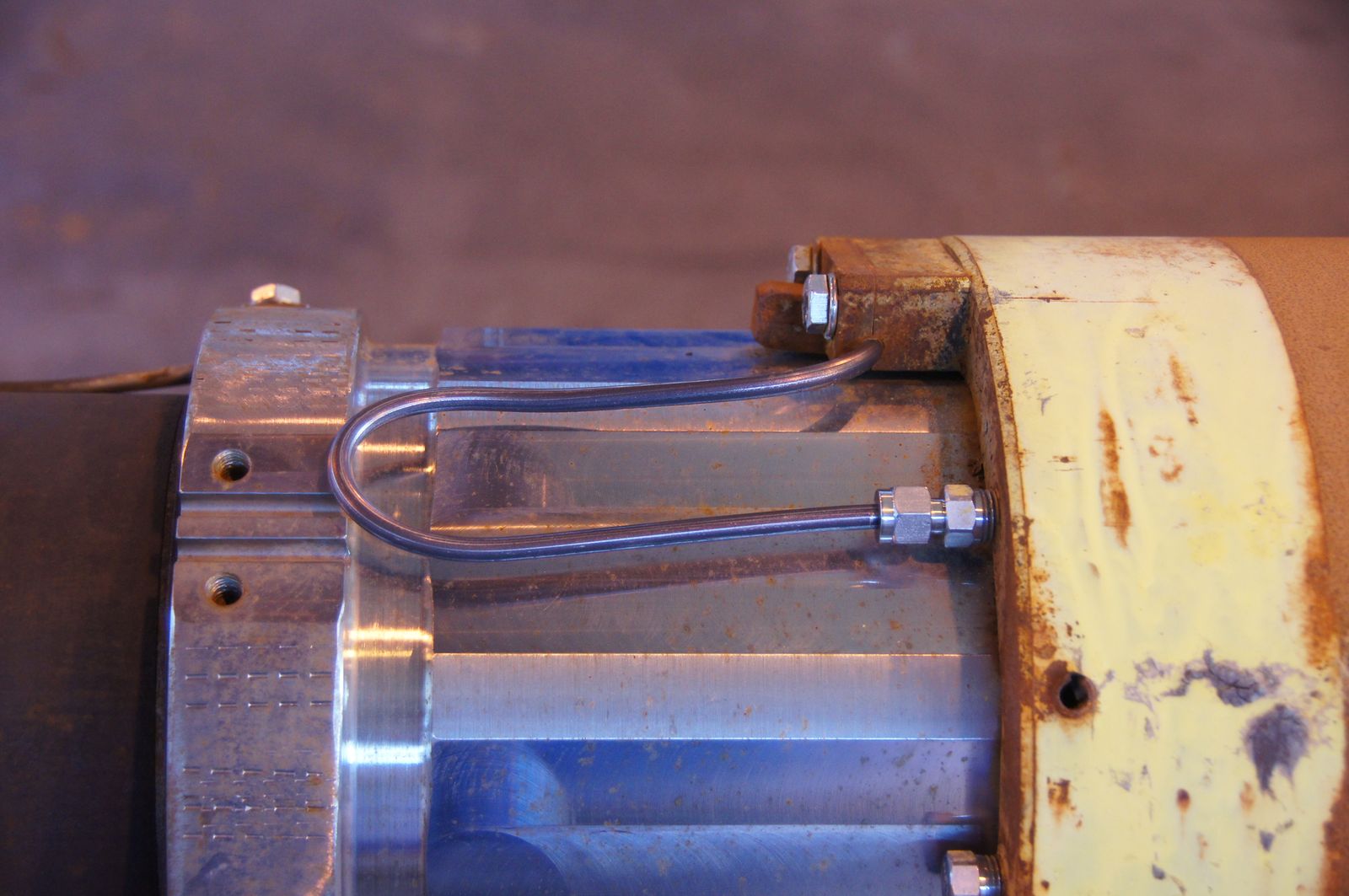
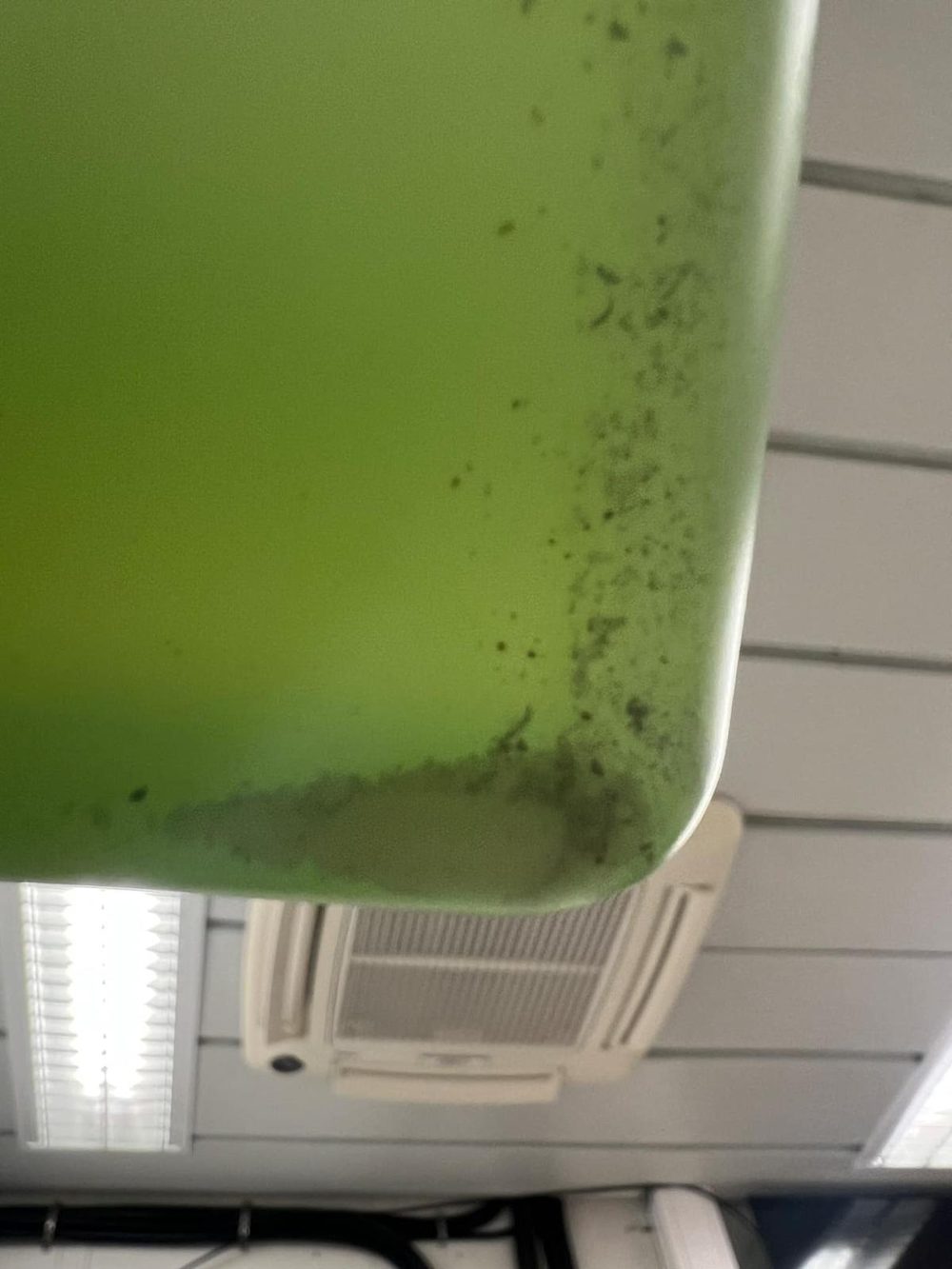
Diesel circulation recovered solid debris for platform and onshore analysis.
Bottles labelled on the job: rinse, diesel, and PPE mix. Suspended solids were visible in the returned fluid. That is the evidence an operator can send to the lab — not a slide, a sample.

SPE takeaways
Preserving access preserves abandonment optionality.
01
Access under pressure
Mechanical access and circulation were achieved under full pressure control in a live offshore environment.
02
No escalation
The operation ran without stepping up to heavier intervention methods.
03
Abandonment optionality
Control-line access may support lower-complexity through-tubing abandonment strategies.
04
Barrier penetrations
Positive access and plugging of control and chemical-injection lines may mitigate leak paths associated with barrier penetrations.
Positive access and plugging of control and chemical-injection lines supports lower-uncertainty through-tubing abandonment — mitigating leak paths associated with barrier penetrations without pulling the completion. That is the argument presented at SPE Well Decommissioning Conference, Aberdeen, 3–4 June 2026.
Next