
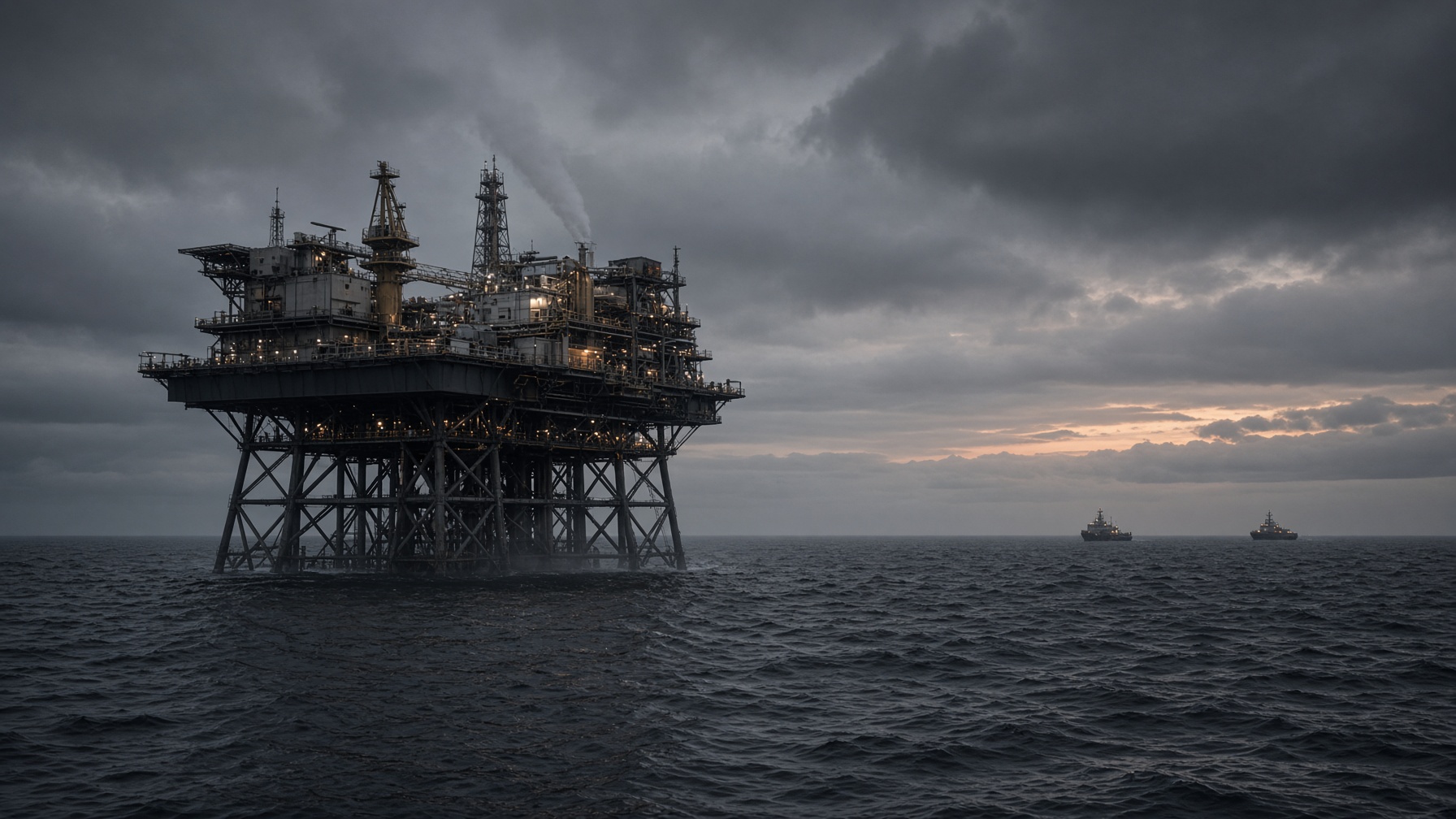
Field-proven on Gullfaks · 2025
Access without workover.
Solid-rod and NanoCoil access is already deployed in live wells. Diagnose, access, and remediate small-bore control and injection lines — or plug them — without retrieving production tubing. Equinor, Gullfaks.
Gullfaks 2025
Two mobilisations, Equinor
ATEX Zone 1
Full pressure control
1 pallet
Versus coiled tubing
NORSOK Z-015
Offshore certified unit
The problem
The constraint is access.
Many intervention challenges are not driven by the component itself, but by the inability to reach it without escalating to a full workover. NanoCoil changes that boundary — 2–3 mm access paths across extended well geometries. A shut-in well on the NCS can cost more than NOK 400 million. WellMend is built to cut that by 90% or more: Opex, not Capex. Other production on the platform continues.
A practical alternative between no intervention and full completion replacement.
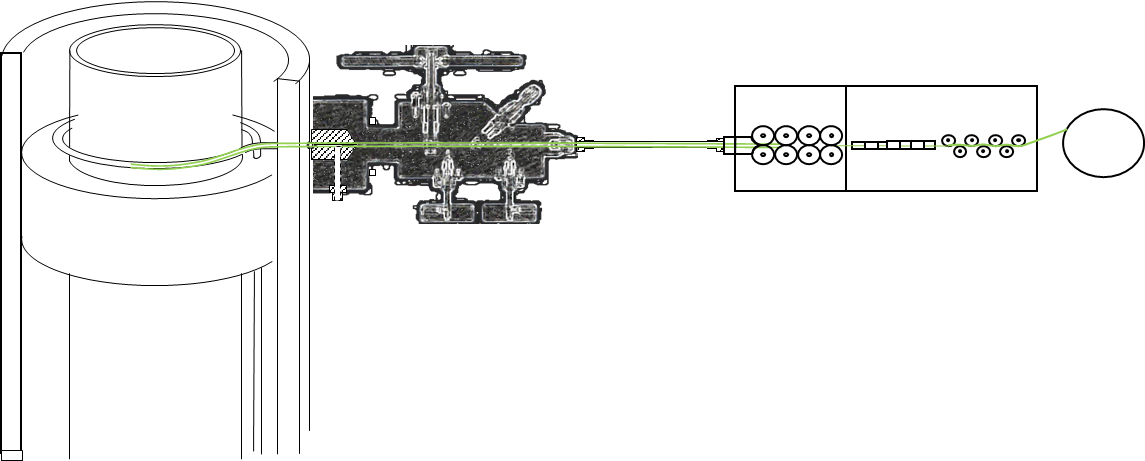
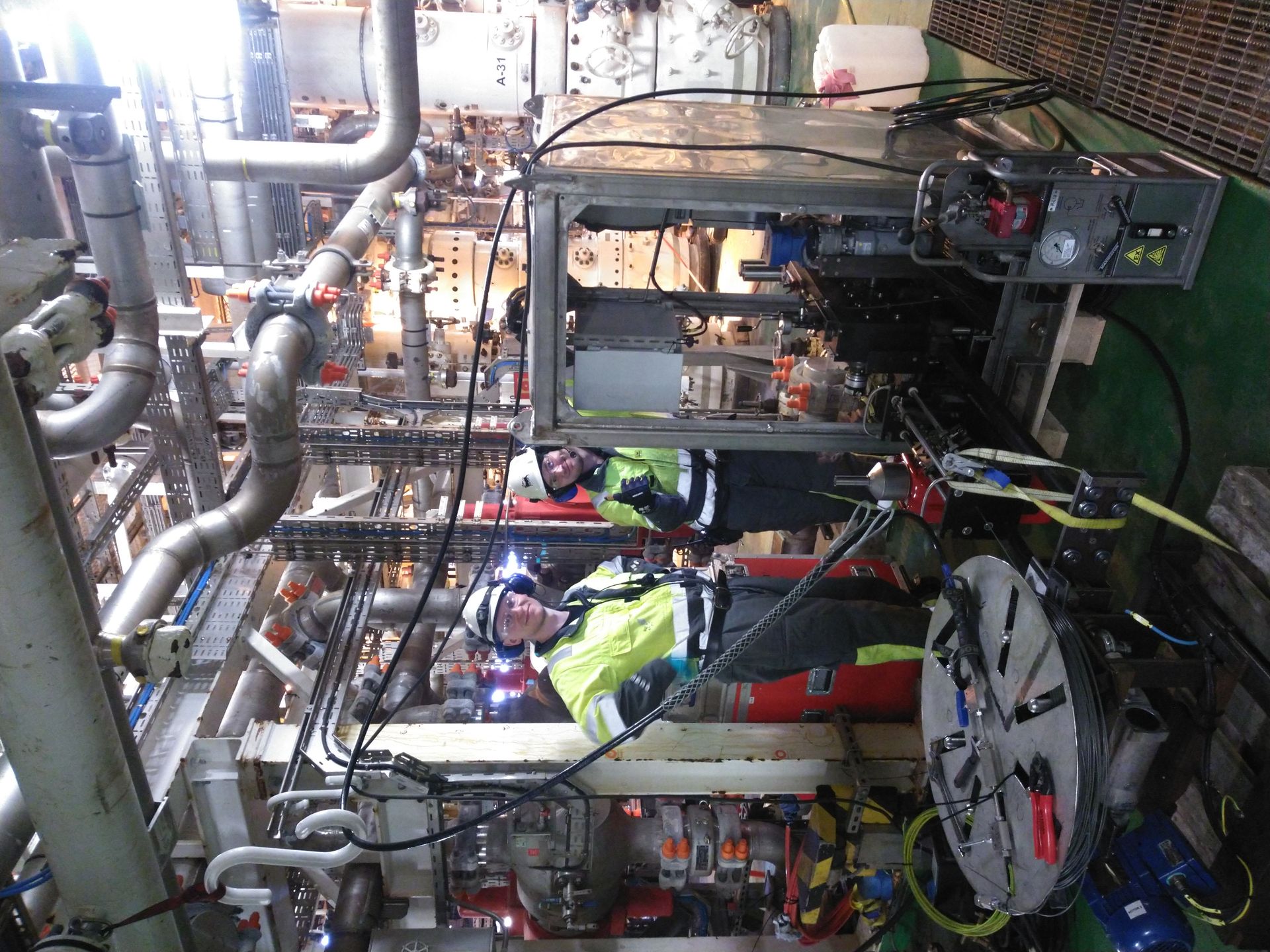
Gullfaks · 2025
Not a concept. Field-proven on the NCS.
Two mobilisations on Gullfaks with Equinor: solid rod, then NanoCoil. Mechanical access, diesel circulation, and debris recovery under full pressure control. No workover. No rig.
Gullfaks field case“Preserving access may preserve abandonment optionality.”
Where it is used
Broader than a single control-line service.
Safety valve
DHSV lost communication
When a downhole safety valve loses hydraulic communication, the well loses a barrier and production shuts in. Solid-rod or NanoCoil restores access down the existing control line instead of pulling the completion.
Read moreIntegrity
Control-line clean-out
Debris, scale, and residual fluids choke millimetre-scale lines. NanoCoil provides a pressure-rated path for displacement and targeted clean-out over hundreds of metres of tight geometry.
Read moreInjection
Chemical injection in existing wells
Enable or restore chemical injection through the small-bore lines already in the completion — without pulling production tubing.
Read moreLeaking line
Pipe-in-pipe replacement
Install NanoCoil inside a leaking control line — a functional replacement without pulling production tubing.
Read moreP&A
Through-tubing abandonment
Clean, verify, and place a liquid plug in control and injection lines as part of through-tubing abandonment — reducing uncertainty before heavier intervention.
Read moreHow it works
Enter the line that is already there. Treat at depth. Leave the tubing.
01
Enter the existing line
Solid rod or NanoCoil is connected to the control or injection line already in the well. No production tubing retrieval. Other production on the platform continues.
02
Navigate the geometry
The string passes tight radii and directional changes inside a 3.6 mm line — the restriction that stops conventional coiled tubing.
03
Circulate and confirm
Pressure-controlled circulation and displacement at depth: debris recovery, diagnostic confirmation, then targeted treatment or plugging.
04
Restore or abandon
Bring a safety valve back, leave a pipe-in-pipe, or place a liquid plug — then demobilise. The well stays in the Opex column.
Carbon
Up to 99.7% less CO₂ than a full workover.
Simulation of a control-line intervention versus a full workover with 3,000 m of new tubing. Figures are CO₂ per job, modelled — not a measured campaign total. One-pallet unit. Other wells on the platform keep producing.
- Workover
- 8,229 t
- CO₂ per job, simulated
- WellMend
- 24 t
- Same job, simulated
| Source | Workover | WellMend |
|---|---|---|
| Workover rig | 1,824 t | — |
| WellMend unit | — | 5 t |
| Platform supply vessel | 192 t | 19 t |
| New tubing, 3,000 m | 6,213 t | — |
| Total | 8,229 t | 24 t |
For operators
Is this a WellMend well?
Three questions. No well-file required. If the issue is access through a millimetre-scale line, we should talk — with geometry, not a pitch.
Access check
1 / 3